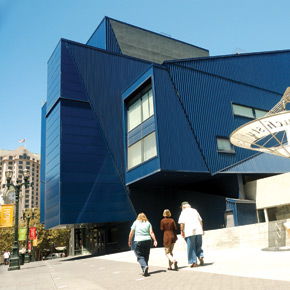
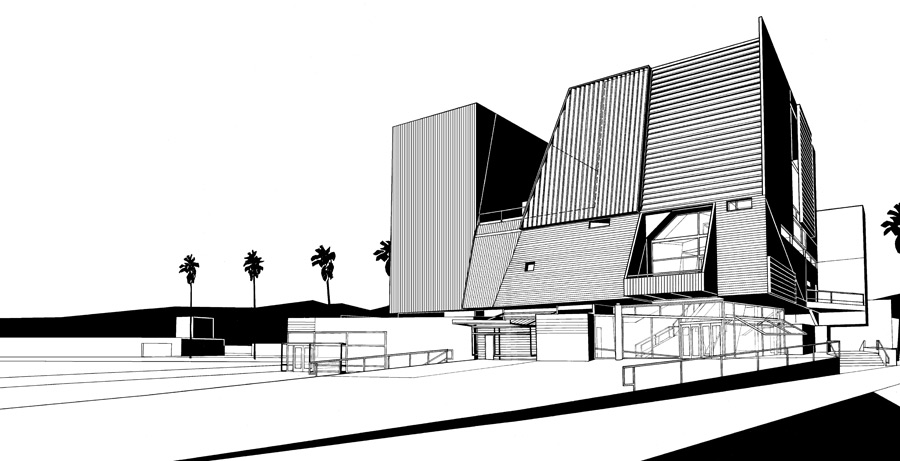
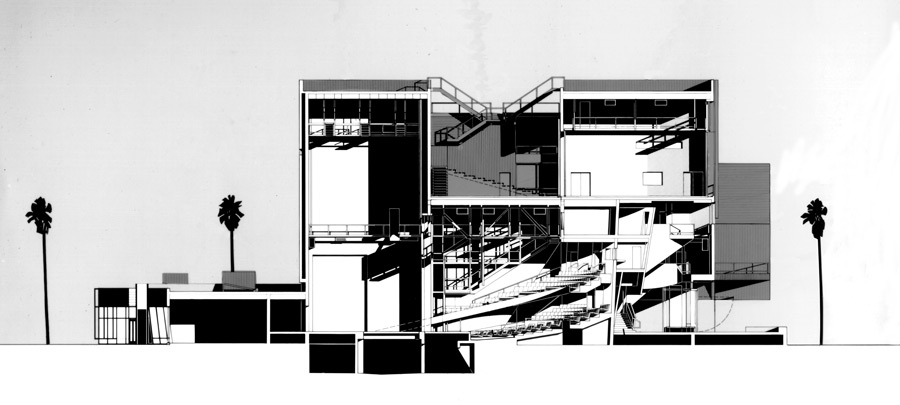
A generation after the heyday of urban renewal, San Jose seems stuck at the halfway point in its search for urbanity. Perhaps best known as a place where peace of mind might be found (Dionne Warwick’s 1960’s hit), it doesn’t appear to be a place where urbanism would be a big concern. But surprisingly, San Jose is the third largest city in California and the eleventh largest in the country, and for this reason the absence of an urban core could be seen as a cause for some embarrassment. It is not for lack of trying.
Four decades of suburban development and annexation have propelled San Jose toward the title of most extensive city in the realm. Los Angeles was
its ideal and its closest competitor in this race. The resulting sprawl, with its proliferation of mega malls and commercial strips, has reduced the old downtown to the spaces between commuter corridors. Exhibiting the entire range of obligatory icons–convention center, arena, museums, hotels, parks, etc.– the current redevelopment efforts are striving to win back these corridors from the auto, aspiring to the kind of cleansed urban environment that balances public amenity and European prototypes with the commercial development practices that pay the bills–a basic textbook vision of contemporary urbanity. This emerging (sub)urb forms the physical and cultural context for this project.